Scaling Impact: Design Operations for the Independent Living Program
Architecting a scalable service audit framework to standardize program delivery and reduce operational ambiguity for Sasha Bruce Youthwork.
The Strategic Problem Statement
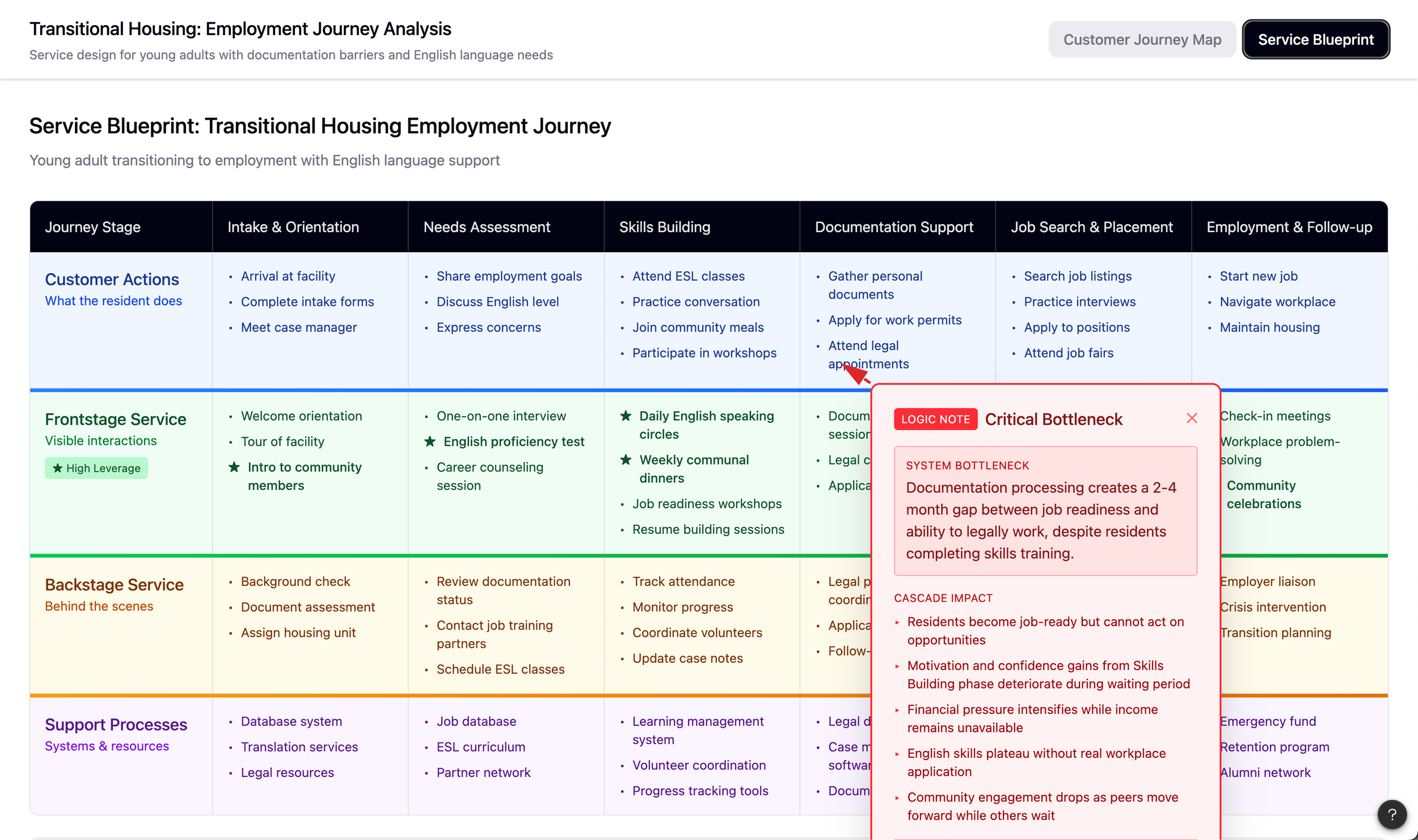
The challenge wasn't just understanding the clients; it was creating a repeatable logic for the organization to follow. I architected the Service Audit Logic that identified fragmentation in program delivery. By mapping 'backstage' operations directly to 'front-stage' client experiences, I created a source of truth that allows the ILP to scale its offerings without increasing administrative overhead.
Standardizing Complexity: The Service Audit Framework
Supporting English Learners to become Independent within the D.C. metro area.
Design Operations & Multi-Disciplinary Leadership
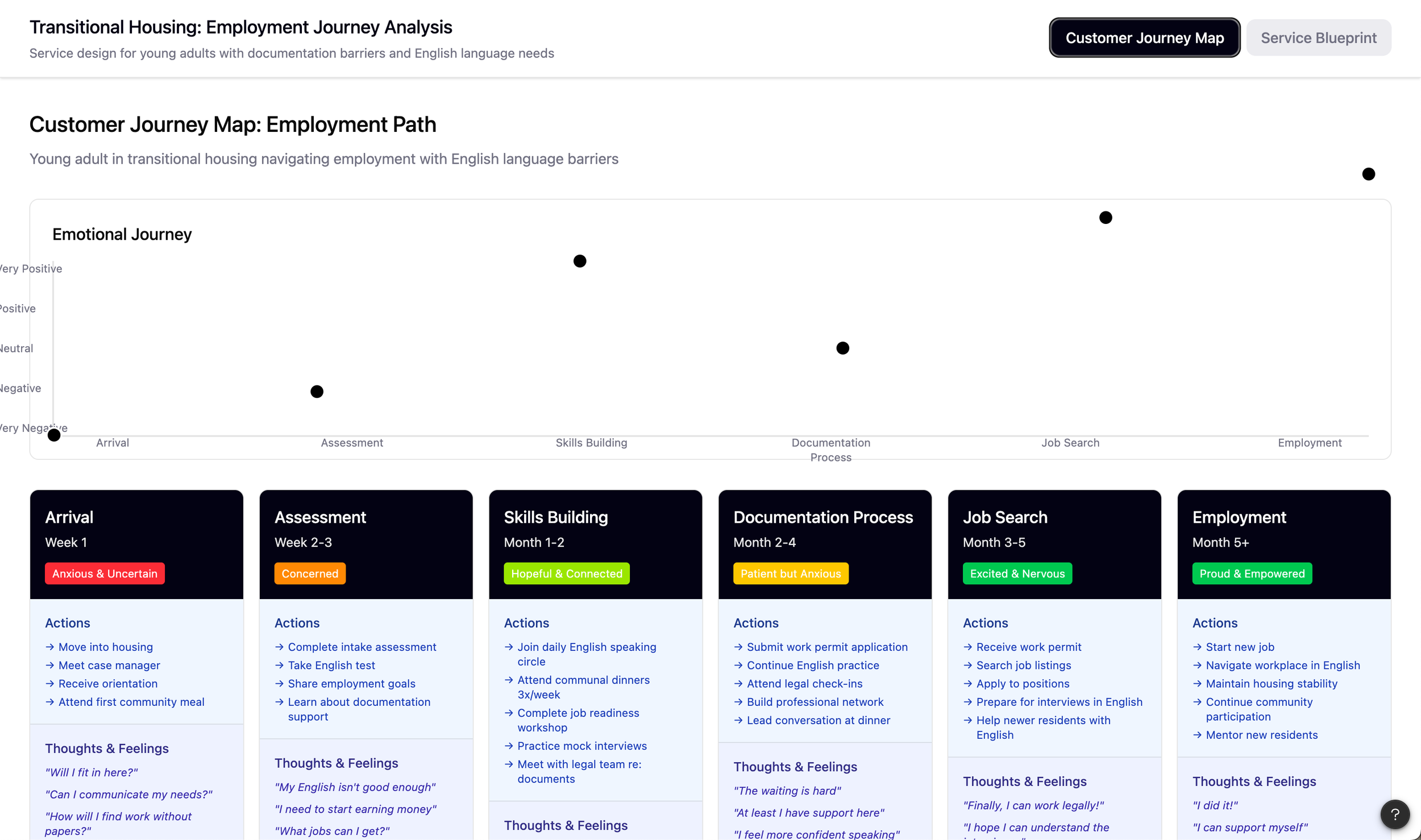
As the Design Lead, my primary focus was on Operational Excellence. I managed six cross-functional design roles and implemented a technical documentation workflow that ensured all research artifacts—from journey maps to service blueprints—were interoperable and actionable for the Sasha Bruce team. I standardized our 'Cycle of Inquiry' to ensure that qualitative insights were translated into quantifiable operational requirements.
What is Capital One Pro Bono?
Service Design at scale is an operational challenge. In partnership with Capital One Pro Bono, I led a cross-functional team to audit and optimize the Independent Living Program’s service ecosystem. I moved beyond traditional research to build a Scalable Service Framework that standardizes how the organization targets client needs, ensuring long-term sustainability and operational clarity.
The ILP project served as a foundational exercise in Scalable Frameworks—proving that service design can be modular, auditable, and resilient to organizational change.