Technical Literacy: Bridging the Designer-Engineer Gap
A deep-dive into semantic architecture, version control, and the mental models of modern software engineering.
The Strategic Problem Statement
Modern product architecture requires more than just visual fidelity; it requires a deep understanding of the underlying codebase. I embarked on this technical intensive to master the constraints and opportunities of Semantic HTML, CSS Architecture, and JavaScript Logic. This journey wasn't just about learning to build; it was a research initiative into Developer Experience (DX), allowing me to design systems that are not only user-centric but also implementation-ready.
Systems Thinking in Code: Logic & Structure
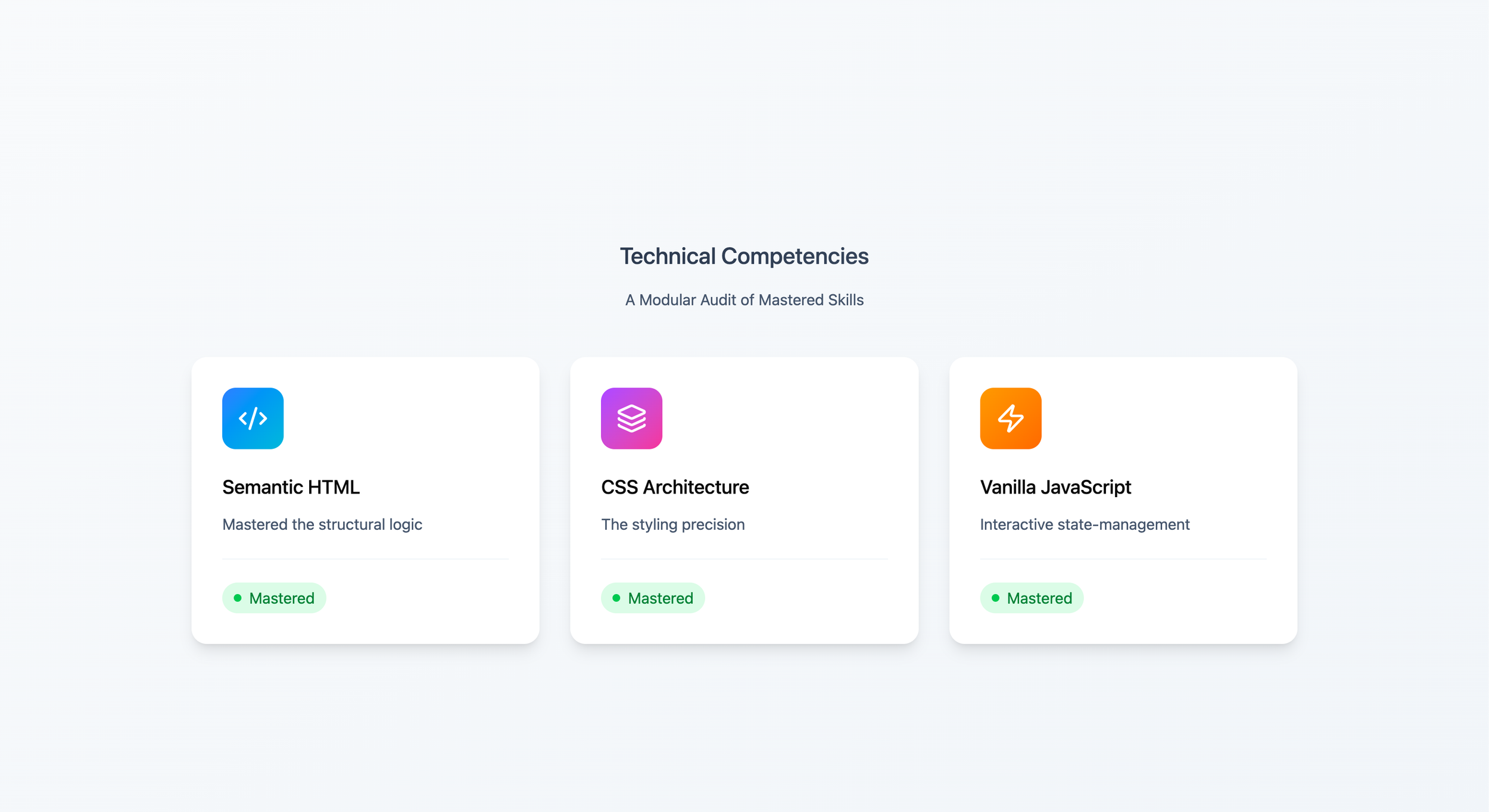
By approaching code as a design system, I focused on the modularity and scalability of front-end components. I explored the relationship between DOM manipulation and state management, paralleling how I architect state-machine logic in enterprise design tools. Understanding the 'Why' behind CSS Flexbox and Grid allowed me to communicate layout constraints to engineering partners with 100% technical accuracy, drastically reducing handoff friction.

Version Control & Collaborative Governance
Central to this project was the mastery of Git-based workflows. I treated my code repository as a governed system, utilizing branching strategies, commit hygiene, and pull requests to simulate a professional engineering environment. This exposure to the developer lifecycle directly informs how I design Design System Documentation, ensuring that my design specs align with the deployment realities of the engineers I support.
The Coding Journey Pathway stands as a foundational exercise in Scalable Frameworks. It proves that a Principal Architect must not only understand the how of design but the how of implementation. By grounding my systems in technical reality, I ensure that the frameworks I build for Capital One and beyond are scalable, implementable, and built on a foundation of engineering empathy.