Strategic Orchestration: Scaling Maternal Health Support
Implementing a $50k service roadmap to stabilize and expand critical maternal health infrastructure for Sasha Bruce Youthwork.
The Strategic Problem Statement
Service design in the public sector requires a rigorous balance of financial viability and human empathy. For Olaiya’s Cradle, I architected a Strategic Service Roadmap that secured $50k in funding by quantifying the operational gaps in maternal health delivery. By treating the program as a living ecosystem, I standardized onboarding and support protocols, ensuring the service remained resilient as it scaled to meet growing community demand.
Economic Value Mapping: From Insight to $50k Impact
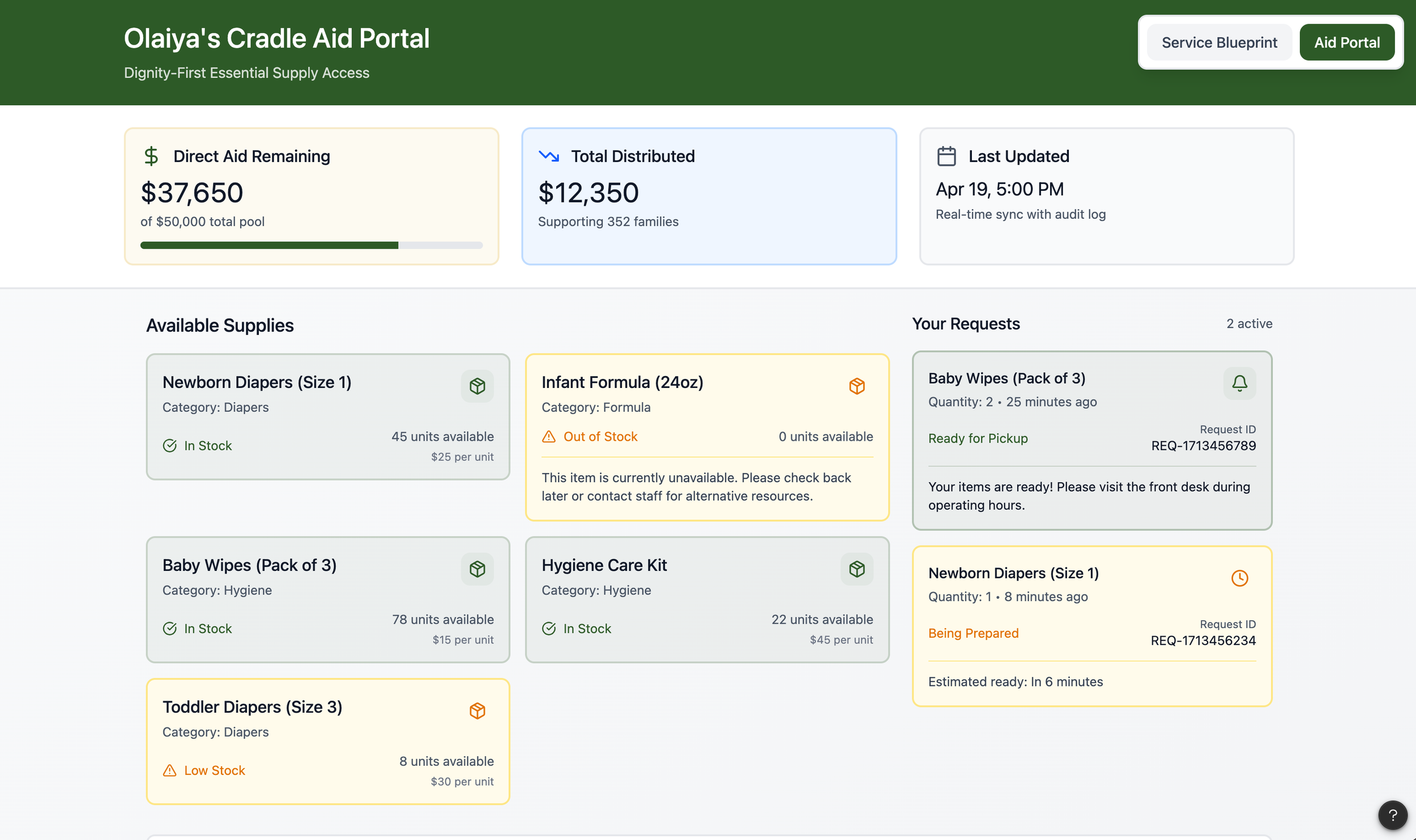
The primary challenge was translating qualitative 'human needs' into a quantitative 'business case' for stakeholders. I led the synthesis of primary research into a Value Map that clearly identified where administrative bottlenecks were hindering service delivery. This data-driven approach allowed us to secure critical funding, proving that standardized service architecture is the most effective vehicle for organizational growth and social impact
Ecosystem Blueprinting & Resource Stewardship
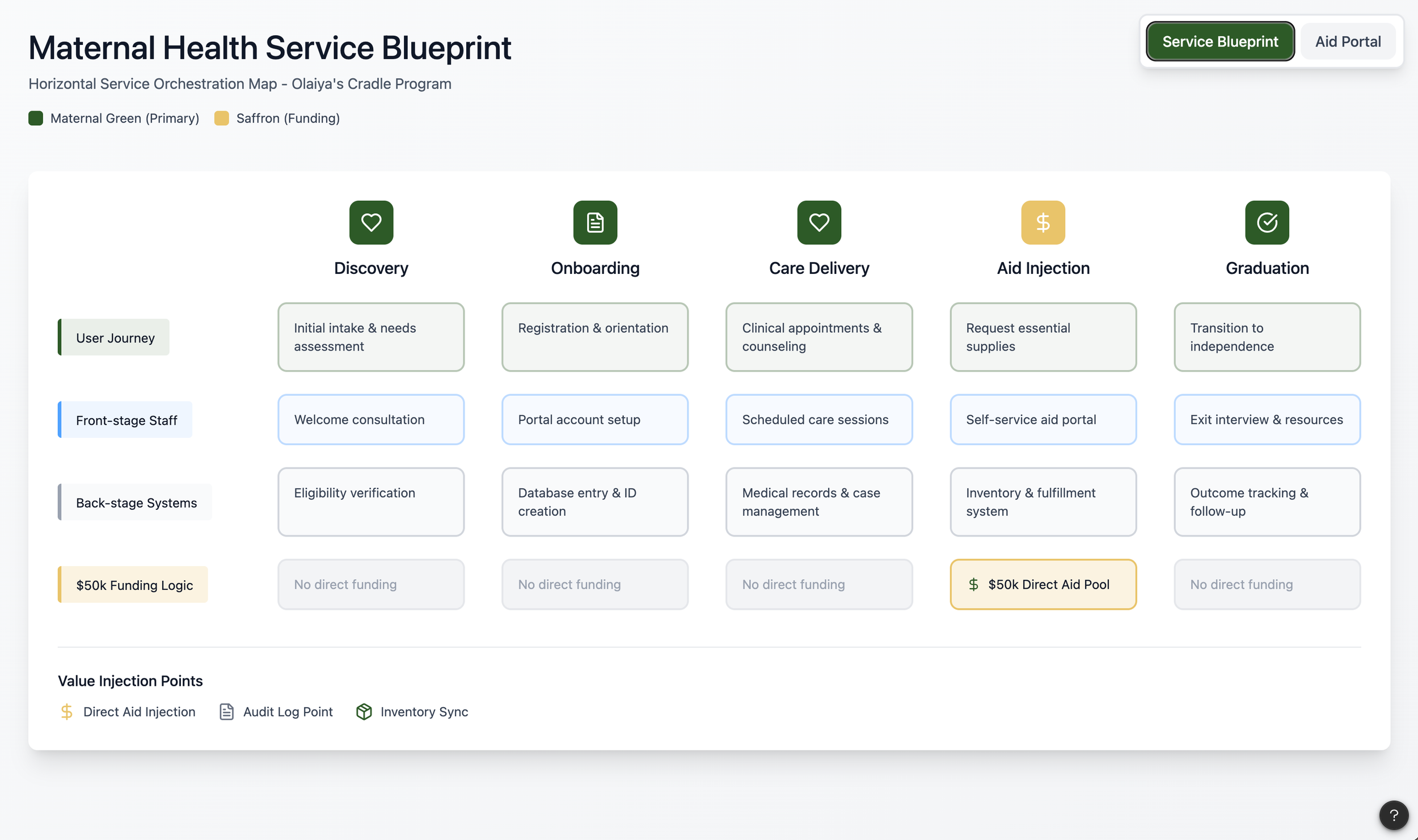
To ensure the program’s long-term sustainability, I developed a comprehensive Ecosystem Blueprint. This map synchronized the 'front-stage' clinical support with 'back-stage' grant management and staffing workflows. This wasn't just about the physical space; it was about the Information Architecture of the service—ensuring that data flow between caseworkers and residents was secure, efficient, and auditable.
What is Capital One Pro Bono?
Service Design at scale is an operational challenge. In partnership with Capital One Pro Bono, I worked with a cross-functional team to audit and optimize the Olaiya’s Cradle service ecosystem. I moved beyond traditional research to build a Scalable Service Framework that standardizes how the organization targets client needs, ensuring long-term sustainability and operational clarity.
Olaiya’s Cradle served as a masterclass in Inclusive Architecture—proving that when we design for the most vulnerable populations, we create more resilient and efficient systems for the entire organization.